How to Target Luxury Property Buyers on Facebook Ads
Learn how real estate businesses can target luxury property buyers with Facebook Ads using location, creative, lead qualification and CRM strategies.
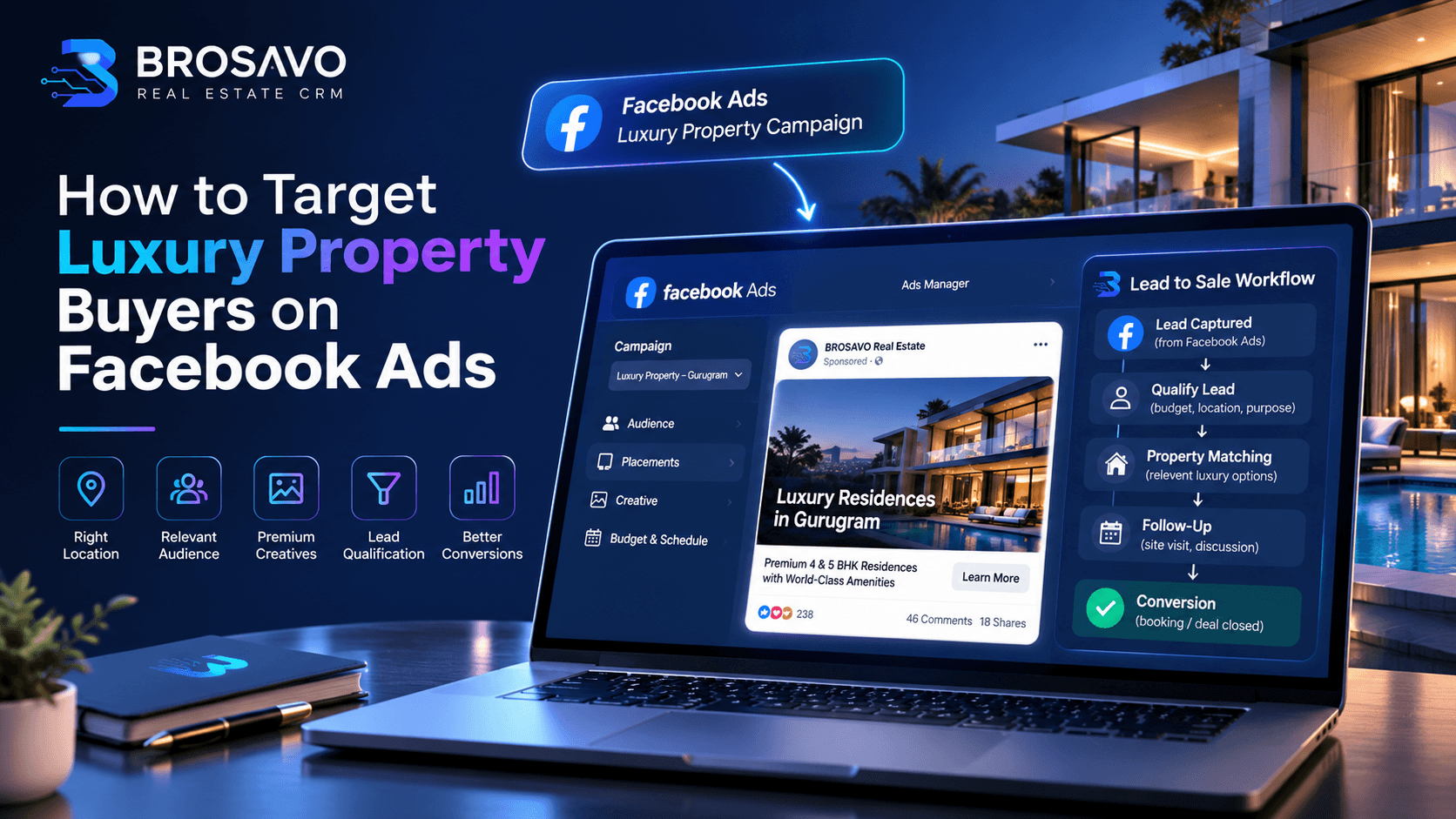
How to Target Luxury Property Buyers on Facebook Ads
Selling luxury real estate requires a different advertising approach from promoting an ordinary residential property. High-value buyers are usually looking for a combination of location, quality, lifestyle, privacy, investment potential and trust—not simply a property with a certain price tag.
Facebook Ads can help real estate businesses reach relevant audiences, generate enquiries and build awareness for premium properties. However, successful luxury property advertising is less about selecting a single "rich buyer" audience and more about combining location, property positioning, creative quality, lead qualification and follow-up.
This guide explains how real estate agents, brokers and developers can build a Facebook advertising strategy for luxury property buyers.
What Makes Luxury Property Advertising Different?
A luxury property campaign needs to communicate more than bedrooms, bathrooms and square footage.
A premium buyer may care about:
- Prime location
- Architecture and design
- Privacy and security
- Lifestyle and amenities
- Proximity to business districts
- International connectivity
- Schools and healthcare
- Investment potential
- Construction quality
- Developer or builder reputation
- Long-term value
That means the advertisement should sell the reason to own the property, not just the property itself.
For example, instead of an advertisement that simply says:
4 BHK Luxury Apartment for Sale
A stronger campaign might position the property around its location, architecture, privacy, views, amenities and lifestyle.
1. Define Your Luxury Property Buyer First
Before creating a Facebook campaign, define who the property is actually suitable for.
Ask:
Who is this property designed for?
Possible buyer profiles could include:
- Business owners
- Senior executives
- Investors
- Entrepreneurs
- Professionals relocating to a city
- Non-resident Indians
- High-income families
- Buyers looking for a second home
- Buyers upgrading from an existing property
However, don't assume that every luxury buyer can be identified through a single demographic setting.
Instead, build your campaign around the property, location, message and buyer intent.
2. Start With Location
Location is one of the strongest signals in luxury real estate advertising.
If you are marketing a luxury property in Gurugram, for example, you may want to focus the campaign around relevant areas rather than advertising to an entire state.
Depending on the property, your campaign could focus on areas such as:
- Golf Course Road
- Golf Course Extension Road
- DLF Phase 1
- DLF Phase 2
- DLF Phase 5
- Sector 42
- Sector 54
- Sector 58
- Dwarka Expressway
- Other premium micro-markets relevant to the property
The same approach can be adapted for luxury properties in Delhi NCR, Goa, Dubai or other markets.
The important principle is:
Target the market where the buyer is likely to have a genuine reason to purchase the property.
3. Use Multiple Audience Signals
Instead of depending on one audience, create multiple campaign audiences and compare performance.
For example:
Audience A — Location Focus
Target people in the relevant geographic market.
Audience B — Property Interest
Use relevant available interests and audience signals that align with the type of property being promoted.
Audience C — Broader Audience
Allow Meta's delivery system to find potential customers within the selected market while providing strong creative and conversion signals.
Audience D — Remarketing
Reach people who have already interacted with your business or advertising, where the relevant audience options and consent requirements allow.
This approach lets your campaign data tell you which audience strategy is actually producing qualified enquiries.
4. Don't Try to Target "Rich People"
One of the biggest mistakes in luxury real estate advertising is assuming there is a simple Facebook setting for:
"People with ₹5 crore net worth."
In practice, you should not build your entire campaign around the assumption that a platform can perfectly identify someone's wealth.
Luxury buyers are better approached through a combination of:
Location + property positioning + creative + intent signals + first-party lead data + follow-up.
The advertisement itself becomes part of the qualification process.
5. Make the Creative Look Like the Property Deserves
Luxury properties require premium creative.
Avoid using low-resolution property photographs, excessive text, generic stock images or cluttered designs.
Your creative should communicate:
- Space
- Architecture
- Materials
- Views
- Lighting
- Landscaping
- Amenities
- Privacy
- Location
- Lifestyle
For premium properties, consider using:
- Cinematic property videos
- Professional photography
- Vertical Reels
- Drone footage where legally permitted
- Interior walkthroughs
- Lifestyle-focused videos
- Carousel advertisements
- Before/after renovation content
- Location-focused creative
The objective is not simply to make the advertisement look expensive.
It should make the buyer understand why the property is premium.
6. Create Different Ads for Different Buyer Motivations
Not every luxury buyer is motivated by the same thing.
Create different creative angles.
Lifestyle Angle
Focus on privacy, architecture, amenities, views and comfort.
Investment Angle
Focus on location, market positioning, infrastructure and long-term investment considerations—without making unsupported returns or appreciation promises.
Family Angle
Focus on space, security, convenience and access to important facilities.
Prestige Angle
Focus on design, address, exclusivity and premium living.
Location Angle
Focus on proximity to business districts, airports, highways, schools or other relevant destinations.
The same property can therefore have multiple advertisements targeting different motivations.
7. Use Video to Build Desire
Luxury real estate is highly visual.
A short video can communicate the property much faster than a long text advertisement.
A simple 20–30 second structure could be:
0–3 seconds: Strong visual hook
"Looking for a luxury home in Gurugram?"
3–10 seconds: Show the strongest property features.
10–18 seconds: Show location and lifestyle advantages.
18–25 seconds: Show the property again with the key qualification.
Final seconds: Clear call to action.
For example:
"Private viewings available. Enquire for price and complete property details."
The advertisement should create curiosity without hiding essential information.
8. Your Lead Form Is Also a Qualification Tool
Generating 1,000 leads is not necessarily better than generating 50 qualified enquiries.
For luxury properties, your lead form can collect useful information such as:
- Name
- Phone number
- Preferred location
- Property type
- Purchase purpose
- Approximate budget range
- Preferred timeline
- Additional requirements
Keep the form focused.
If the form asks too many questions, conversion rates may fall.
If it asks too few, your sales team may receive a large number of low-quality enquiries.
The right balance depends on the property price, campaign objective and sales process.
9. Qualify Leads After They Arrive
Facebook Ads generate enquiries.
Your sales process determines whether those enquiries become opportunities.
A useful workflow is:
Facebook Ad → Lead → Qualification → Property Matching → Follow-up → Site Visit → Negotiation → Closing
The CRM should help the sales team track where each lead is in that process.
For example:
New Lead
↓
Qualified
↓
Property Matched
↓
Site Visit Scheduled
↓
Negotiation
↓
Closed / Lost
This prevents valuable enquiries from disappearing into spreadsheets, WhatsApp conversations or individual sales representatives' phones.
10. Connect Advertising With Your Real Estate CRM
A luxury property campaign becomes much more useful when advertising and sales operations are connected.
Your CRM can provide a structured place to manage:
- Lead source
- Buyer requirements
- Budget
- Preferred location
- Property interest
- Follow-up history
- Sales stage
- Site visit information
- Notes
- Conversion status
This also allows a brokerage to compare campaigns based on the quality and outcome of leads—not just the number of leads generated.
For example, two campaigns might produce:
Campaign A: 200 leads
Campaign B: 60 leads
If Campaign B generates more qualified buyers and site visits, it may be the better campaign despite producing fewer enquiries.
11. Retarget People Who Already Know Your Brand
Luxury property purchases often involve consideration.
Someone may see an advertisement today but contact the broker several weeks later.
Remarketing can help businesses stay visible to people who have already interacted with their advertising, website or other eligible business assets.
Useful remarketing audiences can include people who have:
- Watched your property video
- Visited your website
- Engaged with your social content
- Submitted a previous enquiry
- Interacted with your business
Use appropriate privacy, consent and platform requirements when building and using these audiences.
12. Build Separate Campaigns for Different Properties
Don't put every luxury property into one generic campaign.
A ₹2 crore apartment and a ₹15 crore villa can have completely different buyer motivations.
Consider separating campaigns by:
- Property
- Location
- Price segment
- Property type
- Buyer intent
- Campaign objective
This makes it easier to understand which campaigns are actually working.
13. Test the Creative, Not Just the Audience
Many advertisers immediately change targeting when a campaign performs poorly.
But the problem may actually be the advertisement.
Test variables such as:
Creative
Luxury interior vs exterior
Hook
Location vs lifestyle
Format
Reel vs carousel vs image
CTA
Schedule a viewing vs enquire for details
Copy
Investment angle vs lifestyle angle
The objective is to discover which combination produces the strongest qualified response.
14. Track More Than Cost Per Lead
Cost per lead is useful, but it should not be the only metric.
For luxury property campaigns, monitor:
- Impressions
- Reach
- Click-through rate
- Landing page visits
- Leads
- Cost per lead
- Qualified leads
- Site visits
- Negotiations
- Closings
- Cost per qualified lead
- Cost per site visit
Ultimately, the important question is:
Which advertising campaign produces genuine property opportunities?
15. Common Luxury Real Estate Facebook Ad Mistakes
Mistake 1: Targeting too broadly
A huge audience may generate inexpensive but irrelevant leads.
Mistake 2: Assuming wealth can be targeted perfectly
Platforms cannot be treated as a perfect database of household wealth.
Mistake 3: Using generic property creatives
Luxury buyers expect premium presentation.
Mistake 4: Focusing only on leads
A lead is not the same as a qualified buyer.
Mistake 5: Slow follow-up
A good advertising campaign can still fail if enquiries aren't handled quickly.
Mistake 6: Not tracking the source
Without attribution, it becomes difficult to know which campaigns generate actual sales opportunities.
Mistake 7: Making unsupported investment claims
Avoid guaranteed appreciation, returns or claims that cannot be substantiated.
How BROSAVO Can Support the Sales Workflow
Advertising is only one part of luxury property sales.
Once an enquiry is generated, the sales team needs a structured way to organize customer information, property requirements, follow-ups and sales progress.
BROSAVO Real Estate CRM is designed to help real estate businesses manage these sales workflows in one system.
Depending on the business's configured workflow, teams can organize leads, property information, customer requirements, follow-ups and sales pipeline activity instead of relying entirely on disconnected spreadsheets and conversations.
The goal is simple:
Generate the enquiry → understand the buyer → match the property → follow up consistently → move the opportunity toward closing.
Frequently Asked Questions
Can Facebook Ads target luxury property buyers directly?
Facebook advertising can help real estate businesses reach relevant audiences using available location, audience and campaign signals, but advertisers should not assume that Facebook can precisely identify a person's wealth or purchasing power.
What is the best audience for luxury real estate ads?
There is no single best audience. Test location-based audiences, relevant available audience signals, broader delivery and eligible remarketing audiences while measuring qualified lead quality.
Should luxury real estate ads show the property price?
It depends on the sales strategy and property. Showing the price can help qualify buyers, while omitting it may generate more enquiries. Test both approaches where appropriate.
How much should I spend on luxury property Facebook Ads?
There is no universal budget. Budget should depend on the property's value, target market, competition, campaign duration and expected sales cycle. Start with a measurable test budget and optimize based on qualified results.
Should I use Facebook Lead Forms or a website landing page?
Both can work. Lead Forms can reduce friction, while a landing page provides more space to explain the property and qualify the buyer. Test the approach that best fits your sales process.
How quickly should luxury property leads be followed up?
As quickly as practical. The exact process depends on your team, lead volume and operating model, but every lead should have clear ownership and a defined next action.
Final Takeaway
Luxury property advertising on Facebook is not simply about finding wealthy people.
It is about putting the right property in front of the right market, communicating its value through premium creative, generating relevant enquiries and managing those enquiries through a disciplined sales process.
The strongest strategy combines:
Targeting + Creative + Qualification + CRM + Follow-up + Measurement
When these pieces work together, Facebook Ads can become more than a source of leads—they can become part of a repeatable luxury real estate sales system.
Transform Your Real Estate Business with Brosavo
Brosavo Real Estate CRM helps real estate professionals capture leads, automate follow-ups, manage properties, organize customer relationships, and streamline their daily operations from one modern platform.

Written by
Brosavo Editorial Team
Research & Content Team
The Brosavo Editorial Team publishes in-depth guides, industry research, software comparisons, and best practices for real estate professionals. Every article is reviewed for accuracy and updated regularly to reflect the latest trends in the real estate industry.
Related posts
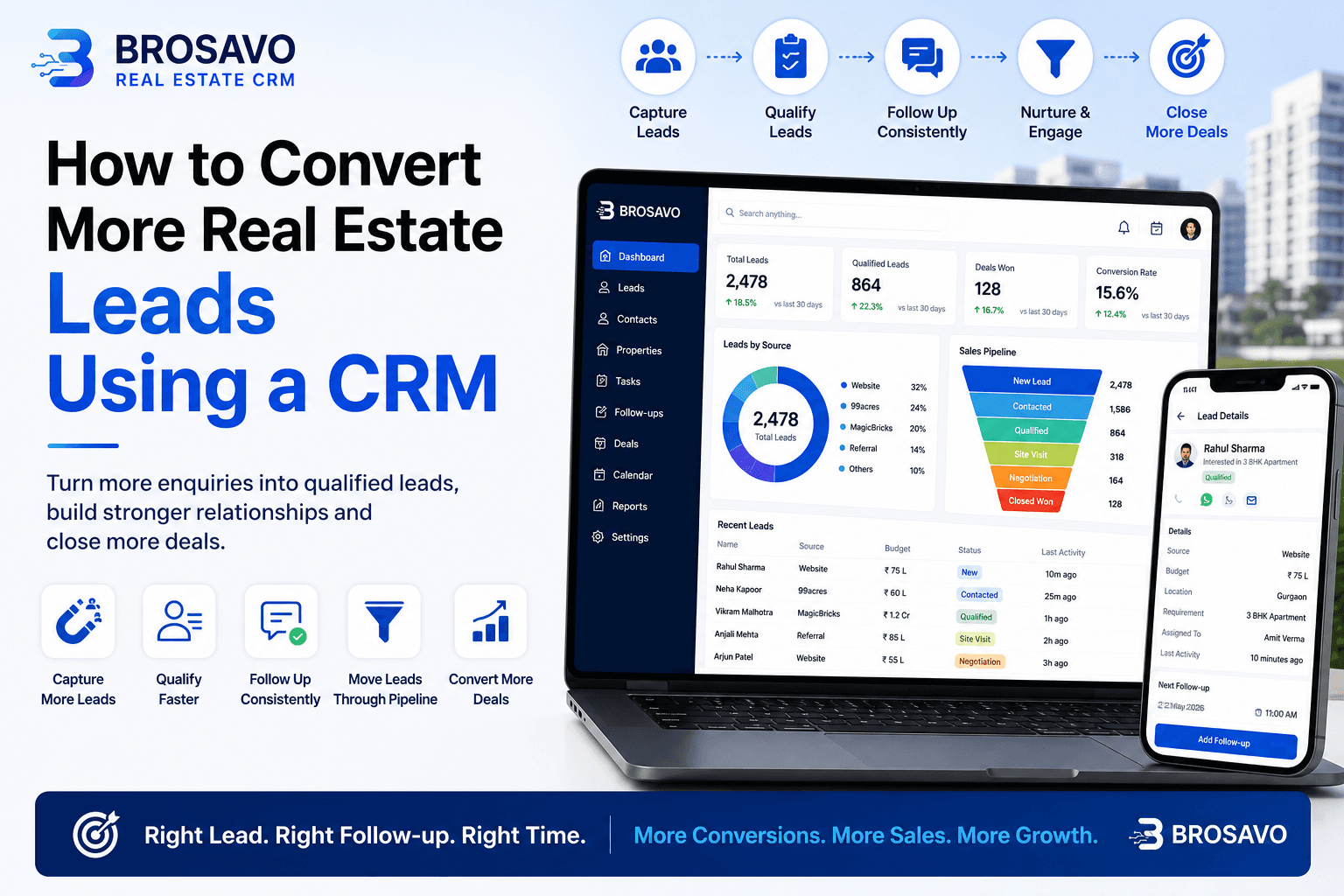
How to Convert More Real Estate Leads Using a CRM
Learn how to convert more real estate leads using CRM software to organize enquiries, follow-ups, property requirements and sales opportunities.
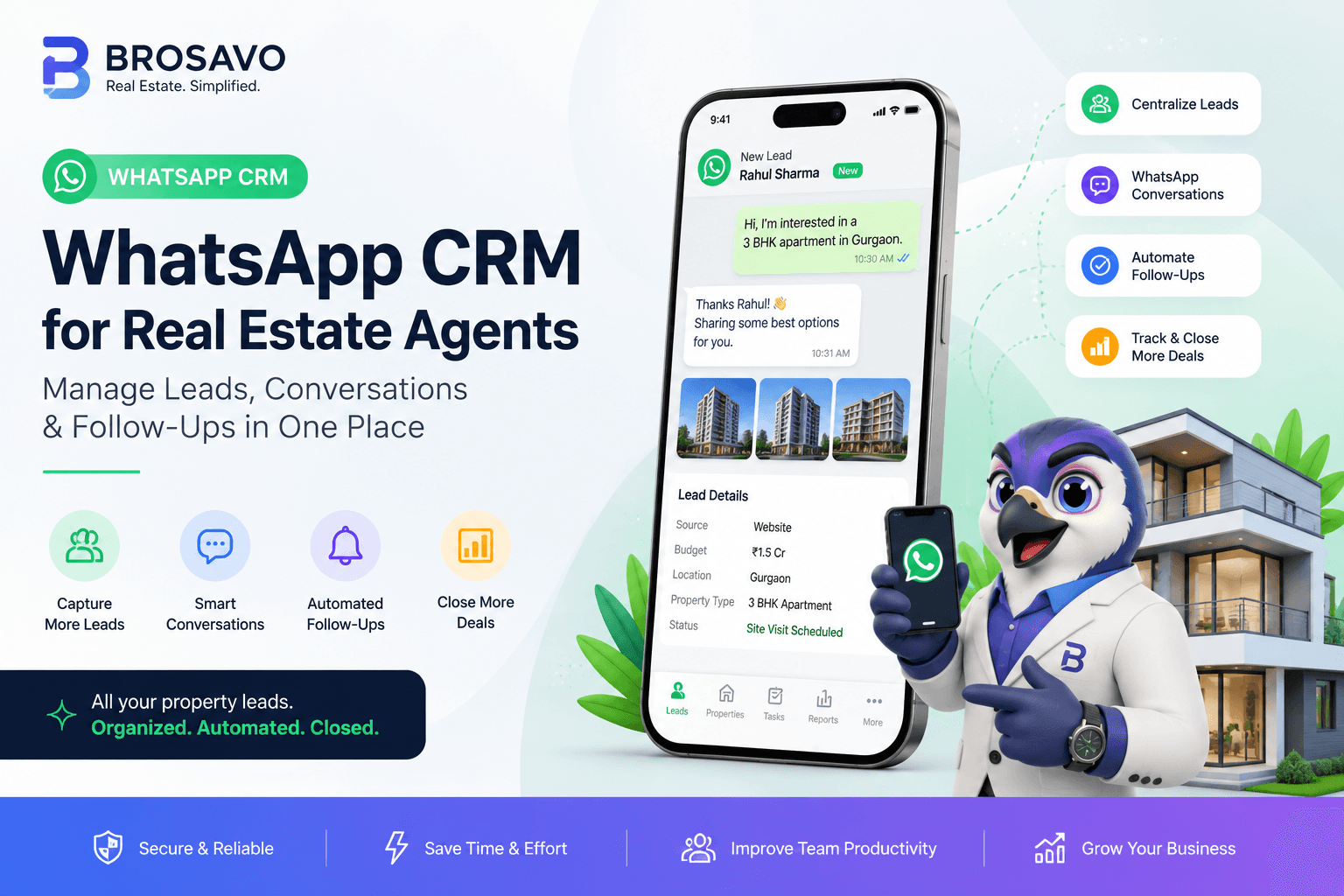
WhatsApp CRM for Real Estate Agents: Manage Leads, Conversations & Follow-Ups
Learn how a WhatsApp CRM helps real estate agents capture property enquiries, organize conversations, manage follow-ups, and improve the sales process.

Real Estate CRM vs Excel: Which Is Better for Managing Property Leads?
Compare real estate CRM vs Excel for managing property leads, customers, follow-ups, properties and sales pipelines, and see when CRM makes sense.