How to Convert More Real Estate Leads Using a CRM: 15 Proven Benefits
Discover how a real estate CRM helps convert more leads into closings. Learn 15 proven benefits, automation strategies, and best practices to boost your conversion rates.
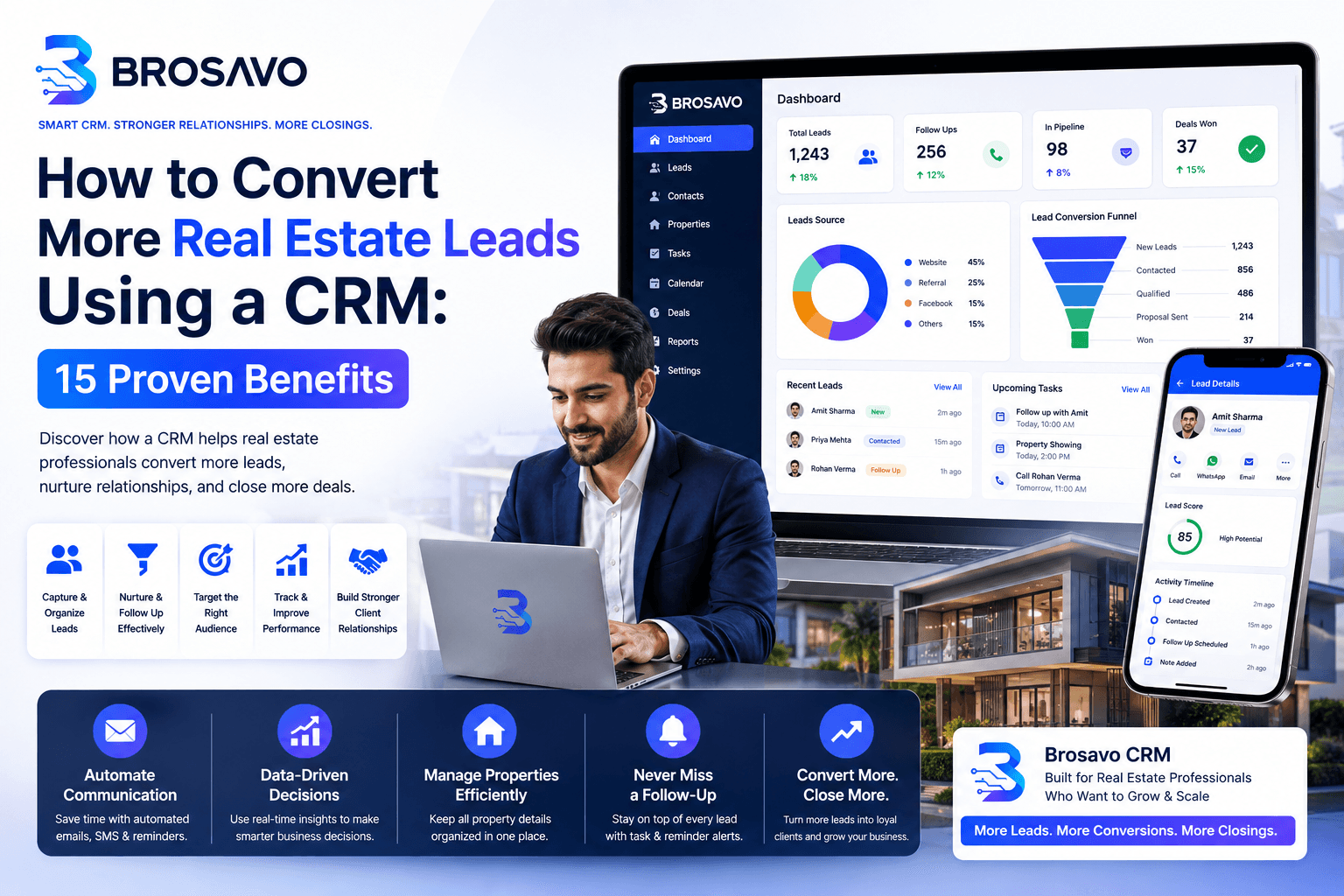
title: "How to Convert More Real Estate Leads Using a CRM: 15 Proven Benefits" slug: "convert-real-estate-leads-crm" meta_description: "Discover how a real estate CRM helps convert more leads into closings. Learn 15 proven benefits, automation strategies, and best practices to boost your conversion rates." category: "Real Estate Tech" author: "Govind Dhall — Founder & Product Engineer at Brosavo" tags: ["real estate CRM", "lead conversion", "lead management", "automation", "real estate technology"] cover_image_alt: "Brosavo Real Estate CRM dashboard showing lead pipeline, conversion metrics, and sales analytics dashboard." seo_title: "How to Convert More Real Estate Leads Using a CRM | Brosavo Blog" seo_description: "Learn how a real estate CRM can help you convert more leads into closed deals. Explore 15 benefits, automation strategies, and proven techniques for maximizing lead conversion." key_takeaways:
- "A Real Estate CRM centralizes leads and automates follow-ups, dramatically increasing conversion rates"
- "Automation reduces manual follow-ups and ensures no lead falls through the cracks"
- "Data-driven insights help prioritize high-value leads and optimize conversion strategies"
- "Integration with marketing tools creates a seamless lead nurturing ecosystem"
Introduction
Converting real estate leads into closed deals remains one of the biggest challenges in the industry. Research shows that 78% of real estate agents fail to convert their leads effectively, and 30% of incoming leads are never even contacted. The problem isn't a lack of leads—it's a lack of systematic follow-up and organization.
Enter the real estate Customer Relationship Management (CRM) system. A properly configured CRM is not just a contact manager; it's a lead conversion engine that can transform your business. In this comprehensive guide, we'll explore how to leverage a real estate CRM to dramatically increase your lead conversion rates, backed by proven strategies, automation capabilities, and industry insights.
- Automation eliminates manual tasks and ensures consistent, timely communication with every lead
- Lead scoring and prioritization help agents focus on high-value prospects
- Integration with marketing tools and websites creates a seamless lead generation and nurturing ecosystem
- Data-driven analytics provide insights to continuously optimize conversion strategies
What is a Real Estate CRM?
A real estate CRM (Customer Relationship Management) is specialized software designed to help real estate professionals manage interactions with current and potential clients. Unlike generic CRMs, real estate CRMs include industry-specific features such as property management, listing syndication, drip email campaigns, lead tracking, and transaction management.
At its core, a real estate CRM serves as a central database that captures, organizes, and analyzes lead information, enabling agents and brokers to build stronger relationships, automate repetitive tasks, and ultimately close more deals. Leading solutions like Brosavo integrate seamlessly with your website, social media platforms, and marketing tools to create a unified lead conversion ecosystem.
Why it Matters
The Business Impact
The real estate market is increasingly competitive, and lead conversion has become the differentiator between successful agents and those struggling to survive. Consider these statistics:
- Only 20% of leads are converted into appointments, and only 2% are converted into closed deals (NAR)
- 50% of real estate leads are never contacted by agents (Redfin)
- Agents who follow up within 5 minutes are 9x more likely to convert a lead (LeadSimple)
- Real estate agents using CRMs close 44% more deals than those who don't (Real Trends)
The bottom line is clear: how you manage and convert your leads directly impacts your bottom line. A CRM transforms the lead conversion process from a haphazard activity into a systematic, data-driven, and scalable operation.
Benefits
1. Centralized Lead Management
A CRM consolidates all your leads from various sources—website, social media, referrals, sign calls, and more—into a single, organized platform. This eliminates the chaos of spreadsheets, sticky notes, and forgotten emails, ensuring you never miss a follow-up opportunity.
2. Automated Follow-ups
One of the most powerful features of a real estate CRM is automation. Set up automated email sequences, SMS reminders, and task triggers to ensure consistent communication with every lead in your pipeline. This systematic approach significantly increases your chances of conversion.
3. Advanced Lead Scoring and Prioritization
Modern CRMs assign scores to leads based on their behavior, engagement, and demographic factors. This allows you to focus your time and energy on high-value prospects who are most likely to convert, maximizing your efficiency and ROI.
4. Personalized Communication
With comprehensive lead data at your fingertips, you can craft personalized communications that resonate with each prospect. Address their specific needs, preferences, and pain points, building stronger relationships that lead to more conversions.
5. Seamless Integration with Marketing Tools
Real estate CRMs integrate with email marketing platforms, social media, IDX websites, and other marketing tools. This creates a cohesive ecosystem where leads move smoothly from marketing to sales, with every interaction tracked and logged.
6. Data-Driven Decision Making
Access real-time analytics and reporting to measure what's working and what isn't. Track conversion rates, lead sources, campaign performance, and agent productivity to make informed decisions that improve your overall strategy.
7. Improved Response Times
CRMs often include mobile apps and real-time notifications, allowing you to respond to leads instantly. The faster you respond, the higher your conversion rates—especially when you can engage within the first 5 minutes.
8. Streamlined Transaction Management
Beyond lead conversion, CRMs help manage the entire transaction process—from contract to closing—keeping everything organized and ensuring nothing falls through the cracks during the critical conversion phase.
9. Enhanced Lead Nurturing
Not every lead is ready to buy or sell immediately. CRMs facilitate lead nurturing through automated drip campaigns, keeping you top-of-mind with prospects until they're ready to make a decision.
10. Reduced Administrative Burden
Automation of routine tasks like data entry, email sending, and task assignment frees up your time to focus on what matters most: building relationships and converting leads.
11. Improved Team Collaboration
For brokerages with multiple agents, CRMs provide a centralized platform for team collaboration. Share lead information, track progress, and assign tasks seamlessly to ensure coordinated efforts.
12. Better Lead Tracking and Attribution
CRMs show exactly where each lead originated—website, social media, referral, etc.—helping you identify which marketing channels deliver the best ROI and optimize your marketing spend accordingly.
13. Automated Drip Campaigns
Set up sophisticated drip campaigns that nurture leads automatically over time. Send relevant property listings, market updates, and valuable content based on lead behavior and preferences.
14. Increased Conversion Rate Tracking
Measure and analyze conversion rates at every stage of the funnel. Identify bottlenecks and optimize your processes to consistently improve conversion performance.
15. Scalability for Business Growth
As your business grows, your CRM scales with you. Handle more leads, add more team members, and expand your marketing efforts without losing efficiency or compromising customer experience.
Features
Essential Features for Lead Conversion
Lead Capture and Management
- Web forms and landing page integration
- Social media lead capture
- IDX website integration
- Custom lead fields and tags
- Duplicate detection and merging
Lead Nurturing
- Drip email campaigns
- Automated SMS messaging
- Call scheduling and reminder features
- Personalized content delivery
- Behavioral triggers
Lead Scoring and Prioritization
- AI-powered scoring algorithms
- Behavioral tracking
- Engagement metrics
- Custom scoring rules
Pipeline Management
- Visual deal tracking
- Stage-based workflows
- Task automation
- Activity tracking
Analytics and Reporting
- Real-time dashboards
- Conversion rate analysis
- Campaign performance metrics
- Lead source attribution
Integration Capabilities
- Website and IDX integration
- Email marketing platforms
- Social media platforms
- Transaction management tools
- Calendars and scheduling
Mobile Access
- Full-featured mobile apps
- Push notifications
- Quick lead response
- Field workflow optimization
Communication Tools
- Built-in email capabilities
- SMS/Text messaging
- Call logging and tracking
- Templated responses
How it Works
A real estate CRM works by creating a systematic approach to lead conversion that follows a typical workflow:
-
Lead Capture: Leads enter the CRM automatically through website forms, landing pages, social media, or manual entry
-
Lead Tracking: The CRM tracks lead activity including website visits, email opens, link clicks, and property viewing behavior
-
Lead Scoring: Based on behavior and demographics, leads are scored and prioritized for follow-up
-
Automated Nurturing: Drip campaigns send targeted content based on lead behavior and preferences
-
Task Management: The system creates and assigns follow-up tasks, ensuring consistent communication
-
Communication: Agents use the CRM to send personalized emails, SMS messages, and make calls
-
Conversion Tracking: The CRM tracks leads through the conversion process, providing insights into what's working
-
Analytics: Data is analyzed to optimize strategies and improve conversion rates continuously
Step-by-Step Guide
1. Implement Your CRM System
Begin by selecting and implementing a real estate CRM that meets your needs. Brosavo offers comprehensive CRM solutions tailored to real estate professionals, including integrated lead capture and automation capabilities.
Action Steps:
- Choose a CRM with real estate-specific features
- Configure your CRM according to your business requirements
- Import existing leads into the system
- Train your team on using the CRM effectively
2. Set Up Automated Lead Capture
Configure your CRM to capture leads automatically from every source possible—your website, landing pages, social media, and more. Brosavo's CRM integrates seamlessly with your website and marketing tools to ensure no lead is lost.
Action Steps:
- Create web forms and landing pages
- Implement IDX website integration for property inquiries
- Connect your CRM to social media platforms
- Set up call tracking numbers for incoming calls
3. Develop Automated Nurturing Sequences
Create a series of automated email and SMS sequences that nurture leads over time. These should be designed to provide value, build trust, and ultimately convert prospects into clients.
Action Steps:
- Create welcome sequences for new leads
- Develop content-specific campaigns based on lead behavior
- Set up re-engagement campaigns for stale leads
- Personalize sequences with lead information
4. Establish Lead Scoring
Create a lead scoring system that identifies your best opportunities. Scoring should reflect engagement level, budget, urgency, and other qualifying factors.
Action Steps:
- Define scoring criteria based on your ideal client profile
- Assign points for positive behaviors and deduct for negative ones
- Set thresholds for priority lead status
- Regularly review and adjust scoring rules
5. Automate Follow-up Activities
Set up automated tasks and notifications to ensure consistent follow-ups. This includes task reminders, appointment scheduling, and notification triggers.
Action Steps:
- Create follow-up task templates
- Set up automated reminders for critical activities
- Configure notification triggers for important events
- Implement AI scheduling for meetings and showings
6. Use Data Insights to Optimize
Regularly review your CRM analytics to identify trends and optimize your approach. Pay special attention to what's working and what isn't.
Action Steps:
- Track and analyze conversion rates
- Identify top-performing lead sources
- Monitor agent performance metrics
- Adjust strategies based on data insights
7. Leverage AI-Assisted Features
Utilize AI features to enhance lead conversion. Brosavo's CRM includes AI-powered lead scoring, automated responses, and insightful analytics to supercharge your conversion efforts.
Action Steps:
- Activate AI features in your CRM
- Use AI-powered lead scoring for better prioritization
- Implement AI-assisted responses for initial communications
- Use AI analytics for predictive lead conversion
Best Practices
1. Respond Within 5 Minutes
Leads are 9x more likely to convert when you respond within 5 minutes. Use your CRM's mobile app and notification features to ensure you're always ready to respond instantly.
2. Personalize Communications
Use the data in your CRM to personalize every interaction. Address specific needs, reference previous conversations, and show that you're paying attention to their unique situation.
3. Nurture All Leads
Not every lead will convert immediately. Develop a comprehensive nurturing strategy that keeps your brand top-of-mind with all prospects, even those who aren't ready to transact yet.
4. Set Clear Communication Cadence
Establish a regular communication schedule for each lead type. Consistent, predictable communication builds trust and keeps you at the forefront of the prospect's mind.
5. Use AI for Better Prioritization
AI-powered lead scoring and analytics can help you identify your best leads more quickly. Focus your energy on high-value opportunities while maintaining automated nurturing for others.
6. Track Everything
Use your CRM to track every interaction, note, and task. This data is invaluable for understanding lead behavior, optimizing strategies, and ensuring nothing falls through the cracks.
7. Provide Value First
Focus on providing value before asking for anything. Share market insights, property information, and helpful content. This approach builds trust and positions you as a helpful resource, not just someone looking for a sale.
Common Mistakes
1. Failing to Respond Quickly
Leads lose interest fast. Waiting even a few hours to respond significantly reduces your conversion chances. Use automation to acknowledge leads immediately and schedule time for personal follow-up.
2. Neglecting Lead Nurturing
Not all leads are ready to convert immediately. Neglecting to nurture leads until they're ready is one of the biggest mistakes agents make. Implement drip campaigns to stay in touch without being pushy.
3. Using CRM as a Simple Contact Manager
Many agents use CRMs as digital address books, missing the powerful automation and analytics features that drive conversion. Fully leverage all capabilities, especially automation and analytics tools.
4. Inconsistent Follow-up
Follow up consistently and persistently. Many leads require multiple touchpoints—often 5-12—before they convert. Don't give up after one or two attempts.
5. Relying on Manual Data Entry
Manual data entry leads to errors and wasted time. Automate lead capture from all sources to ensure data accuracy and free up time for lead conversion activities.
6. Not Integrating with Marketing Tools
Your CRM and marketing tools should work together seamlessly. Lack of integration creates data silos and missed opportunities.
7. Ignoring Analytics
Your CRM contains invaluable data on what's working and what isn't. Failing to analyze this data means you're missing out on opportunities for optimization.
Comparison Table
| Option | Best For | Key Advantage | Ideal Use Case |
|---|---|---|---|
| Brosavo CRM | Full-service brokerages and agents | AI-powered automation, seamless IDX integration, comprehensive analytics | Professionals who need a complete lead generation and conversion solution |
| Salesforce Real Estate Cloud | Large brokerages and enterprises | Advanced customization, robust reporting, extensive ecosystem | Large teams needing complex workflows and custom integrations |
| HubSpot for Real Estate | Growing brokerages and agents | Comprehensive inbound marketing tools, free CRM tier, good integration | Those heavily invested in content marketing and lead generation |
| Propertybase | Luxury and high-volume brokerages | Luxury-focused features, integrated MLS, polished interface | Premium brokerages with high-value properties and clientele |
| Pipedrive | Small to medium teams | Visual pipeline, affordable pricing, easy setup | Teams wanting a straightforward, visual approach to lead management |
Industry Statistics
- 78% of real estate agents fail to effectively convert their leads, resulting in significant revenue loss (Real Estate Express)
- 30% of incoming real estate leads are never contacted by agents (Redfin)
- Agents who follow up with leads within 5 minutes are 9x more likely to convert them (LeadSimple)
- Real estate agents using a CRM close 44% more deals than agents who don't (Real Trends)
- Automated lead nurturing generates 50% more sales-ready leads at 33% lower cost per lead (Forrester Research)
- CRM usage in real estate has grown by 300% over the last five years, with 90% of top producers using CRMs (NAR)
- 80% of real estate sales come from 20% of leads, making lead scoring and prioritization critical (NAR)
Frequently Asked Questions
How can a real estate CRM help convert more leads?
A real estate CRM helps convert more leads by centralizing lead data, automating follow-ups, providing lead scoring for prioritization, and enabling personalized communication. These features ensure no lead is forgotten, response times are optimal, and engagement is consistent and targeted.
What features should I look for in a real estate CRM for lead conversion?
Key features for lead conversion include automated lead capture, AI-powered lead scoring, email and SMS automation, task management, pipeline tracking, mobile access, and comprehensive analytics. Integration capabilities with IDX websites and marketing tools are also essential.
How quickly should I respond to real estate leads?
Lead response time is critical. Agents who respond within 5 minutes are 9x more likely to convert a lead compared to those who wait longer. The faster your response, the higher your conversion rates. Consider implementing automated initial responses immediately when direct follow-up isn't possible.
Can a CRM help with lead qualification?
Absolutely. Modern CRMs use AI-powered lead scoring to automatically qualify leads based on behavior, engagement, and demographic factors. This helps you focus on high-value opportunities and prioritize your activities for better conversion results.
Why is lead nurturing important in real estate?
Not every lead is ready to buy or sell immediately. Lead nurturing keeps you top-of-mind with prospects through consistent, value-driven communication. Over time, nurturing builds trust and positions you as the go-to expert when they're ready to transact, significantly increasing your conversion rates.
Conclusion
Converting more real estate leads requires a systematic approach that combines timely responses, personalized communication, and consistent nurturing. A real estate CRM is not just a tool—it's a comprehensive solution that transforms lead conversion from a guessing game into a data-driven, automated process that delivers measurable results.
From centralizing lead management and automating follow-ups to providing AI-powered lead scoring and analytics, the benefits of a real estate CRM are clear. Whether you're a solo agent looking to close more deals or a brokerage seeking to scale, the right CRM can dramatically improve your conversion rates and grow your business.
Call to Action
Ready to transform your lead conversion process? Explore Brosavo's all-in-one real estate CRM solution today. Our platform combines AI-powered automation, seamless IDX integration, and powerful analytics to help you convert more leads into closings. Schedule a free demo and discover how Brosavo can help you take your real estate business to the next level.
Transform Your Real Estate Business with Brosavo
Brosavo Real Estate CRM helps real estate professionals capture leads, automate follow-ups, manage properties, organize customer relationships, and streamline their daily operations from one modern platform.

Written by
Brosavo Editorial Team
Research & Content Team
The Brosavo Editorial Team publishes in-depth guides, industry research, software comparisons, and best practices for real estate professionals. Every article is reviewed for accuracy and updated regularly to reflect the latest trends in the real estate industry.
Related posts
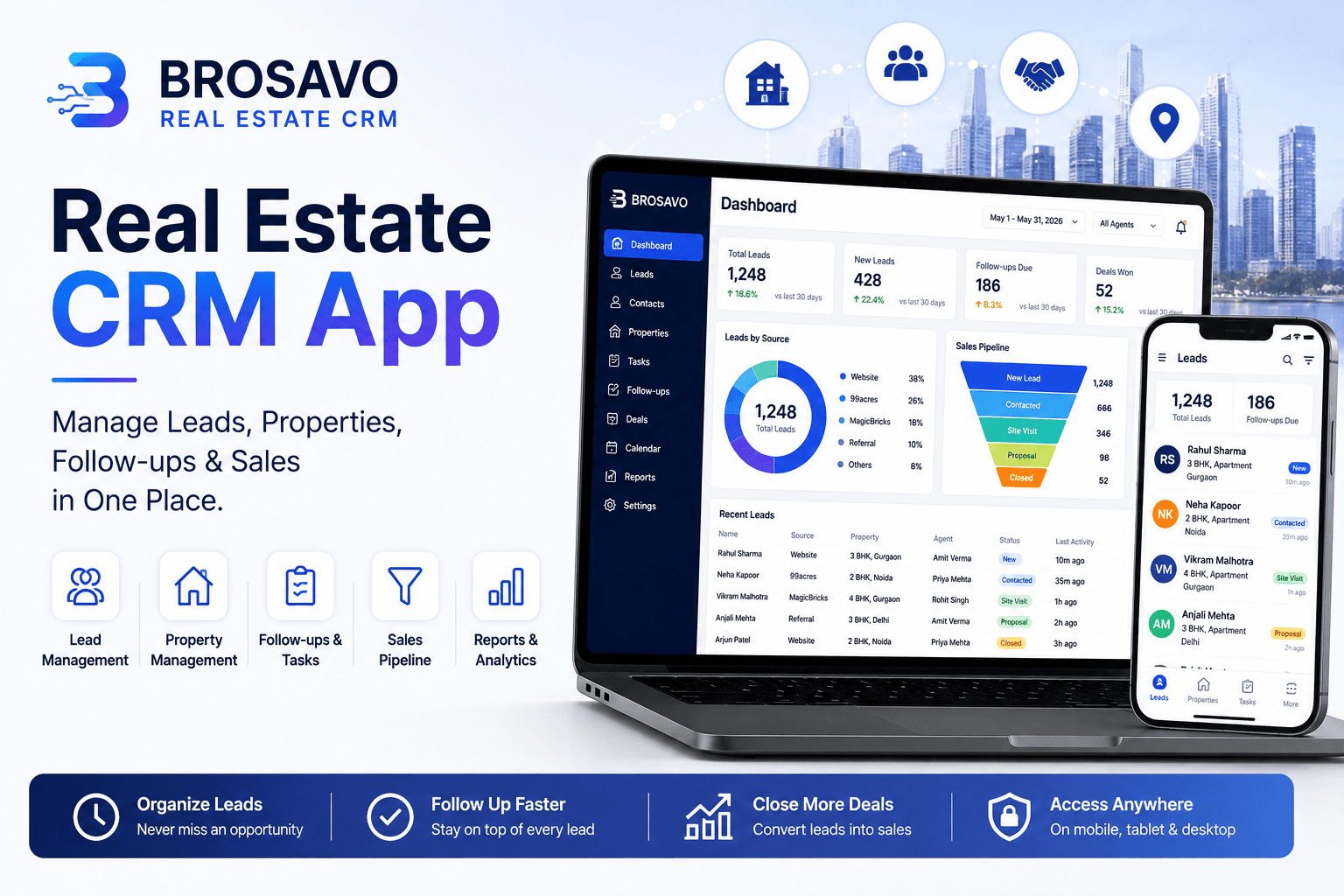
Real Estate CRM App: Manage Leads, Properties, Follow-Ups & Sales in One Place
Looking for a real estate CRM app? Discover how BROSAVO helps agents, brokers and teams manage leads, properties, follow-ups and sales.
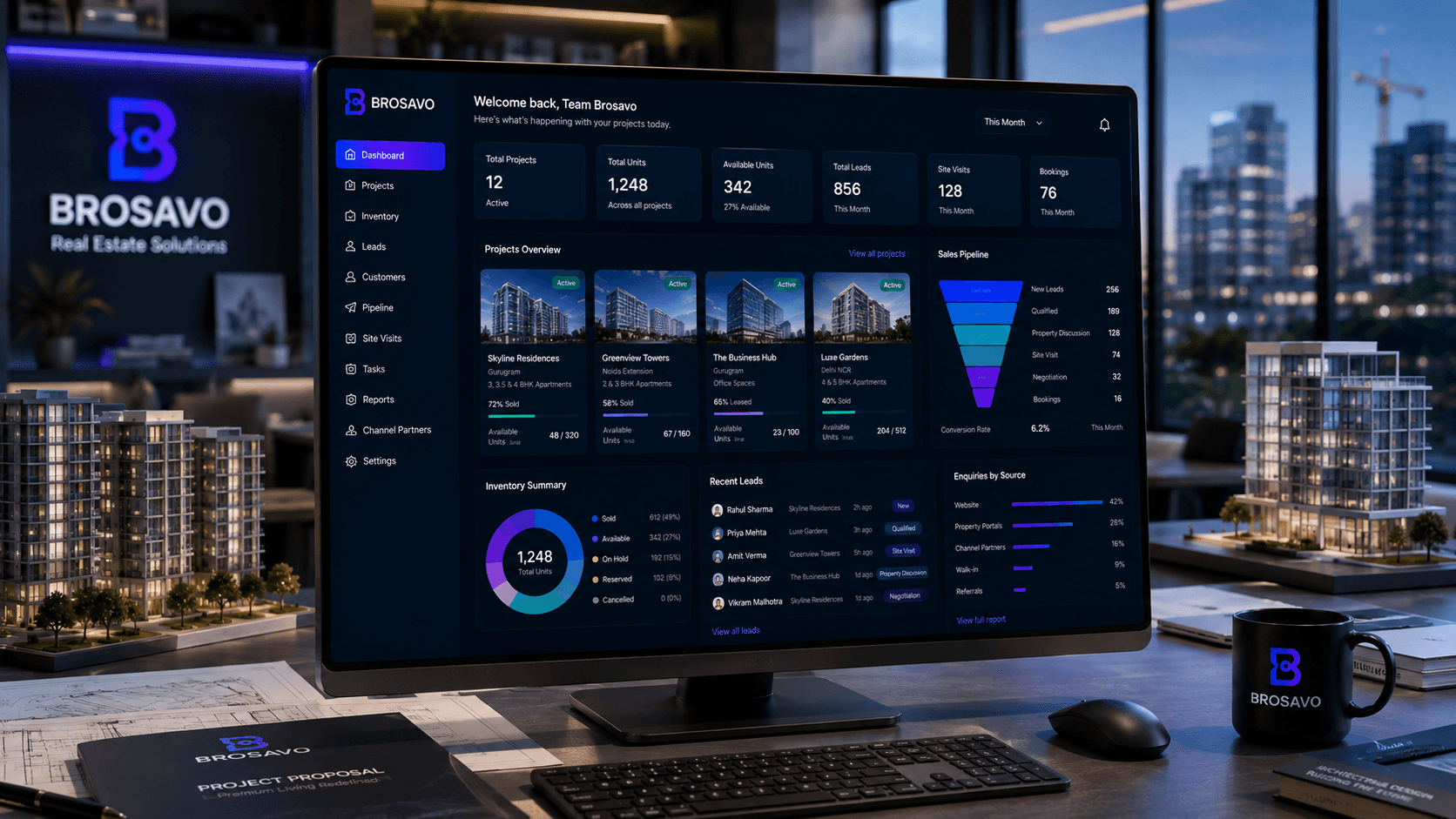
Real Estate CRM for Developers: Manage Projects, Inventory & Sales
Real estate CRM for developers to organize project leads, property enquiries, inventory, sales pipelines, customers and sales team workflows.
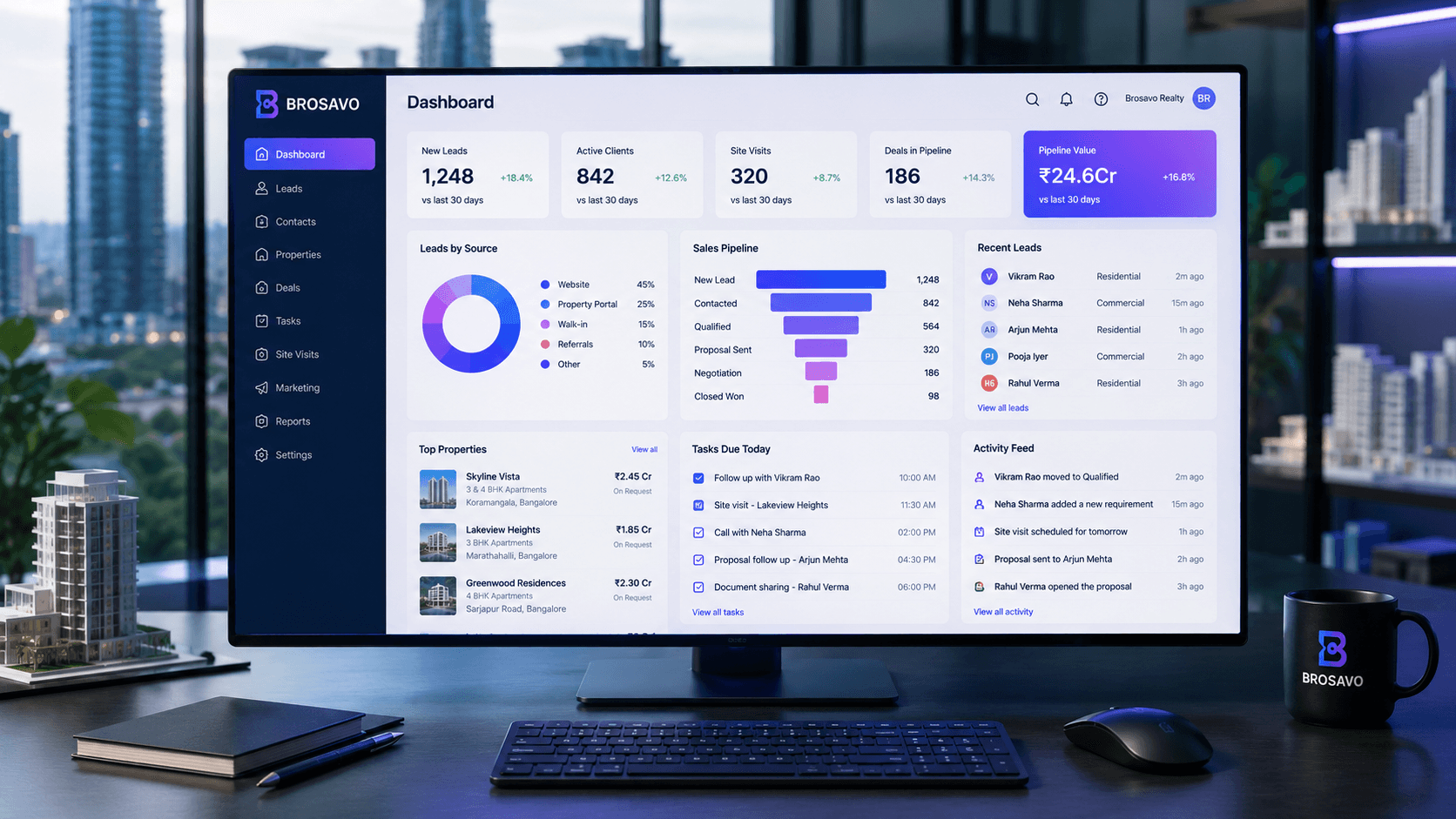
Real Estate CRM Software | Brosavo Real Estate CRM
Brosavo Real Estate CRM helps agents, brokers and sales teams manage leads, customers, properties, follow-ups and real estate sales pipelines.