Real Estate CRM Pricing: Costs, Plans & What to Compare
Compare real estate CRM pricing, software costs, plans, features and pricing models. Learn what affects CRM cost and how to evaluate Brosavo.
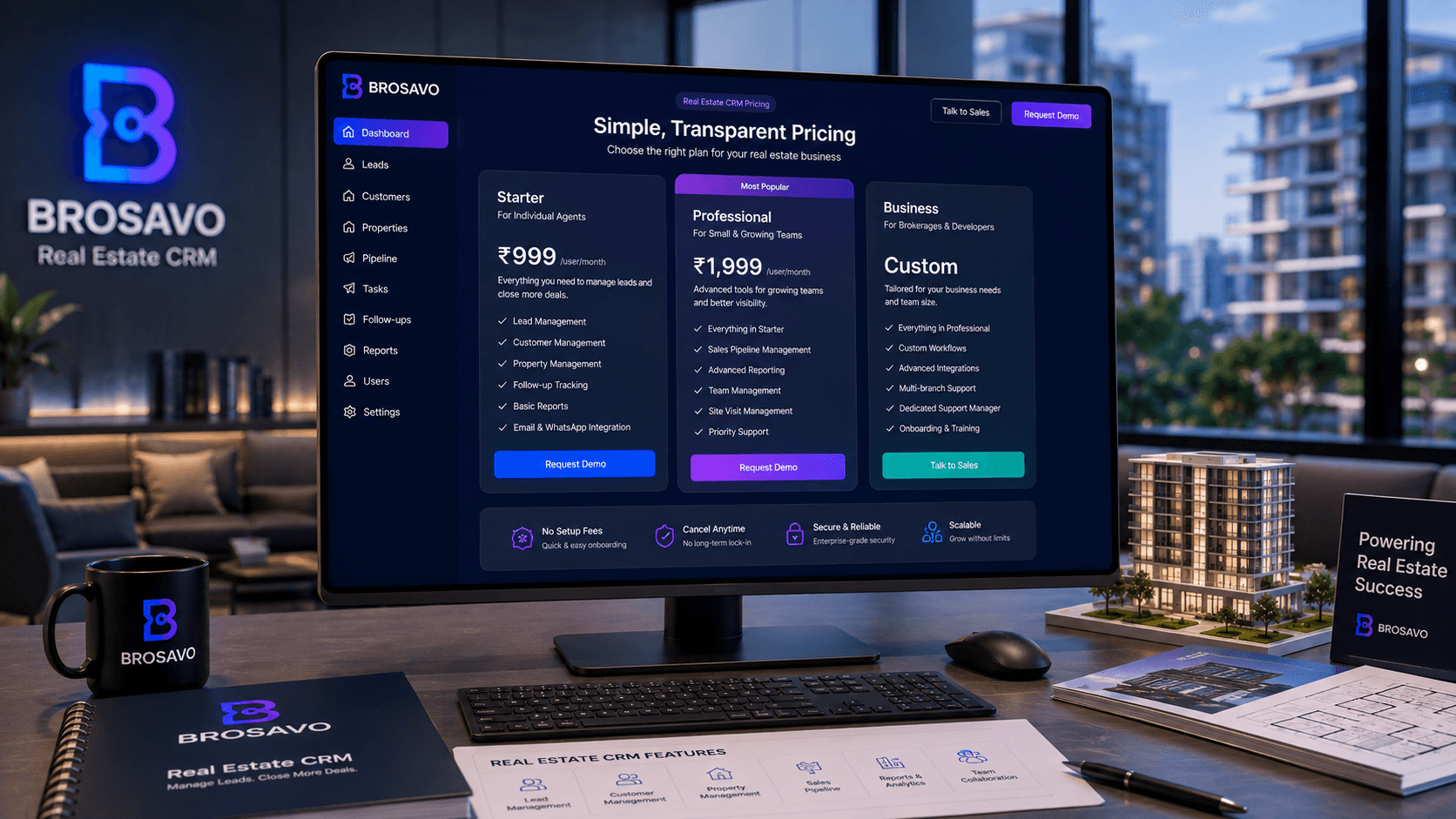
Real Estate CRM Pricing: Costs, Plans & What to Compare
Choosing a real estate CRM is not only a software decision. It is also a pricing decision.
Real estate businesses need to understand what they are actually paying for, which features are included, whether pricing is based on users or teams, and whether additional implementation or integration costs apply.
Brosavo is a Real Estate CRM platform designed for real estate businesses to manage leads, customers, sales workflows and property-related processes.
This guide explains how real estate CRM pricing works, what affects CRM cost, what different types of real estate businesses should evaluate, and how to approach Brosavo pricing.
Important: Brosavo pricing should be confirmed directly with the Brosavo team. This page does not publish an assumed or fabricated subscription price.
What Does Real Estate CRM Pricing Include?
Real estate CRM pricing is the cost a real estate business pays to use CRM software for managing its customer, lead and sales workflows.
Depending on the CRM provider, pricing can include different combinations of:
- Lead management
- Customer management
- Sales pipeline management
- Follow-up management
- Property workflows
- Property inventory
- Team management
- Reporting and dashboards
- User accounts
- Data storage
- Integrations
- Support
- Implementation services
The important point is that CRM pricing cannot be evaluated from the monthly subscription alone.
Two CRM products may have similar subscription prices but very different capabilities, limits and implementation requirements.
How Much Does Real Estate CRM Software Cost?
There is no single price for real estate CRM software.
The cost depends on the CRM provider, pricing model, number of users, features, implementation requirements and integrations.
Some CRM platforms use per-user pricing. Others use team or account-based pricing. Some providers offer different feature tiers, while larger businesses may receive custom pricing.
For this reason, businesses should compare the total cost of using the CRM, rather than choosing a platform solely because it has the lowest advertised price.
A simple way to evaluate CRM cost
Consider:
| Cost factor | What to evaluate |
|---|---|
| Users | How many agents or employees need access? |
| Features | Which CRM capabilities are included? |
| Leads | Are there lead limits? |
| Properties | Are property records or inventory limited? |
| Storage | Is there a storage limit? |
| Integrations | Are external services charged separately? |
| Support | What level of support is included? |
| Implementation | Is setup included or charged separately? |
| Upgrades | What happens as the business grows? |
What Affects Real Estate CRM Pricing?
Several factors can influence the total cost of a real estate CRM.
1. Number of users
Some CRM providers charge according to the number of users.
An individual real estate agent may therefore have a very different software cost from a brokerage with 20, 50 or 100 agents.
Before choosing a plan, determine who actually needs access to the CRM.
2. Features
CRM plans can differ significantly in the functionality they include.
A basic plan may focus on lead and customer management, while higher plans may include more advanced reporting, team controls, integrations or workflow capabilities.
For a real estate business, evaluate whether the plan supports the workflows you actually need.
3. Lead management requirements
A real estate business may manage hundreds or thousands of enquiries.
When comparing CRM pricing, check whether the plan places limits on:
- Leads
- Contacts
- Activities
- Follow-ups
- Storage
- Historical records
A low subscription price can become less attractive if the business quickly reaches usage limits.
4. Property workflows
Real estate businesses have requirements that are different from many generic businesses.
Depending on the CRM, property-related functionality may include:
- Property information
- Property inventory
- Property enquiries
- Lead-property relationships
- Sales workflows
- Property-related customer information
If property workflows are important to your business, make sure they are actually included in the plan you are evaluating.
5. Reporting and dashboards
Sales teams often need visibility into:
- Leads
- Pipeline stages
- Follow-ups
- Sales activity
- Conversions
- Team performance
Reporting requirements can affect which CRM plan is appropriate for a business.
Is Real Estate CRM Pricing Per User?
Not always.
Real estate CRM providers can use different pricing models.
Common models include:
Per-user pricing
The business pays according to the number of users.
For example:
Number of users × price per user
Transform Your Real Estate Business with Brosavo
Brosavo Real Estate CRM helps real estate professionals capture leads, automate follow-ups, manage properties, organize customer relationships, and streamline their daily operations from one modern platform.

Written by
Brosavo Editorial Team
Research & Content Team
The Brosavo Editorial Team publishes in-depth guides, industry research, software comparisons, and best practices for real estate professionals. Every article is reviewed for accuracy and updated regularly to reflect the latest trends in the real estate industry.
Related posts
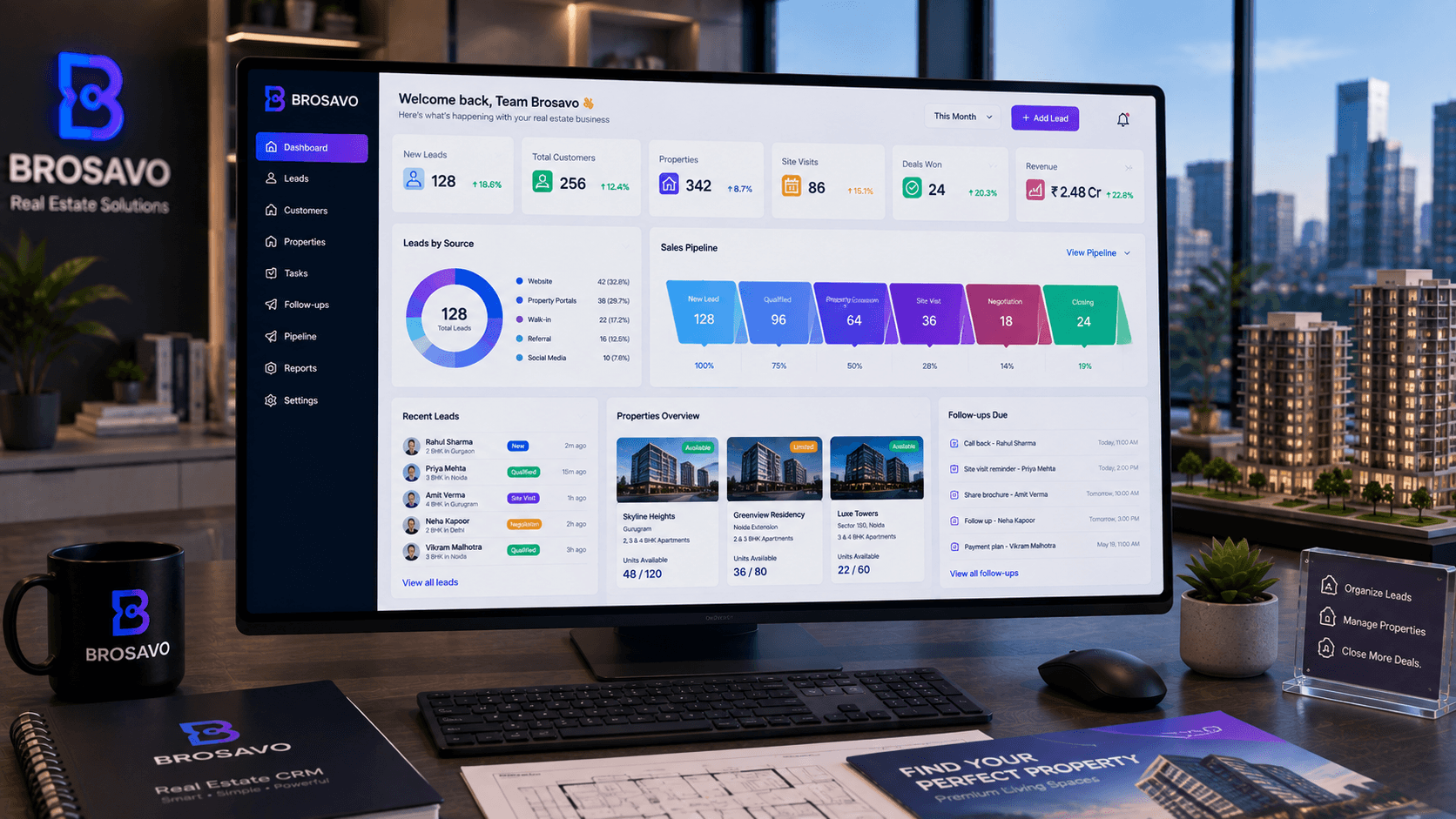
Free Real Estate CRM: What to Look For Before Choosing One | Brosavo
Looking for a free real estate CRM? Compare lead limits, users, property inventory, follow-ups and reporting, then evaluate Brosavo for your team.
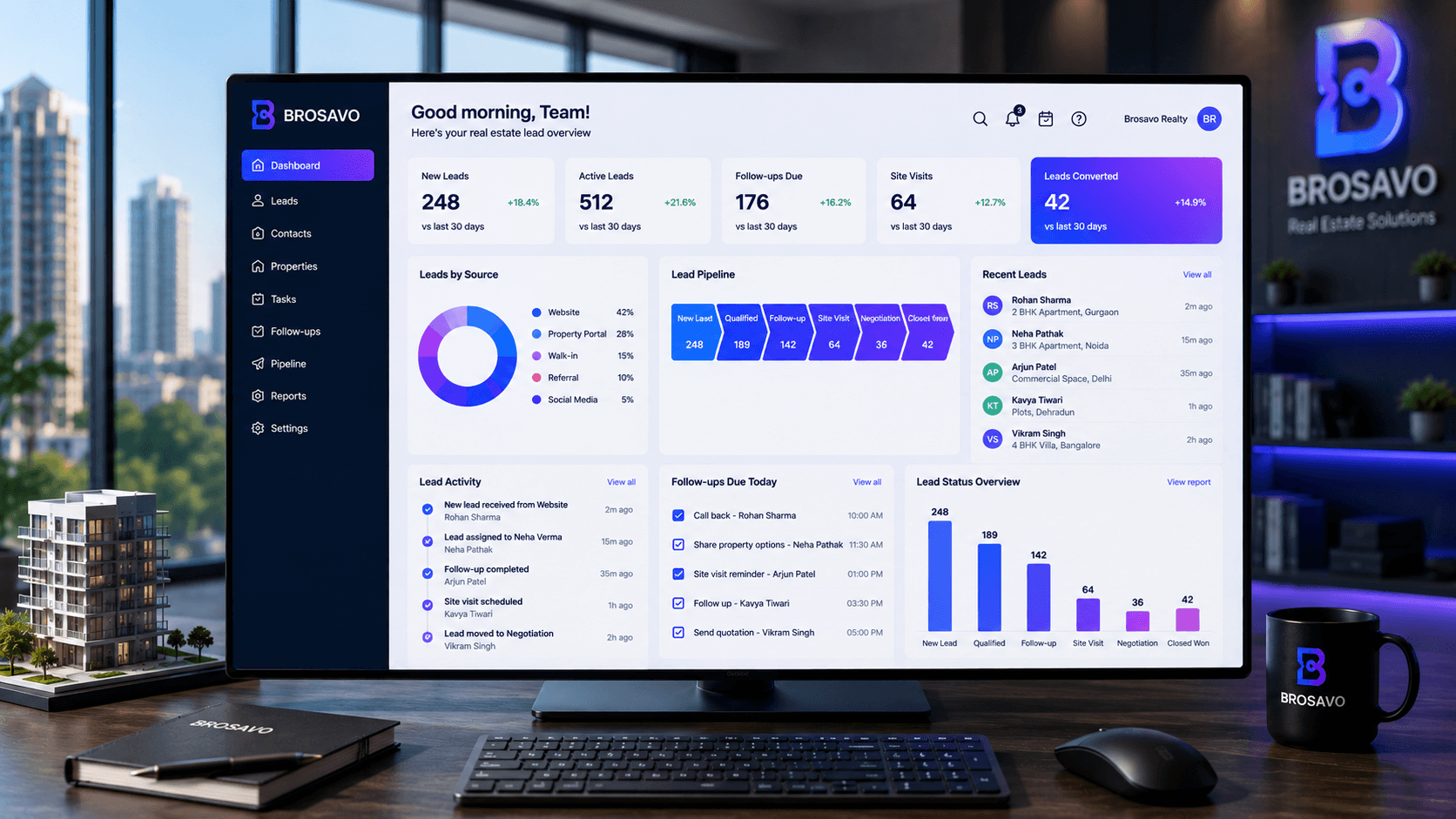
Real Estate Lead Management Software | Track & Convert Property Leads
Manage real estate leads from enquiry to closing with Brosavo. Track leads, follow-ups, assignments, pipelines and customer interactions.

Real Estate CRM Canada | CRM for Canadian Realtors | Brosavo
Discover how a real estate CRM helps Canadian realtors manage leads, clients, properties, follow-ups and sales in one modern platform with Brosavo.