Property Management CRM for Real Estate Teams | Brosavo
Property management CRM for real estate teams to organize property inventory, enquiries, customer follow-ups, sales workflows and property-related data.
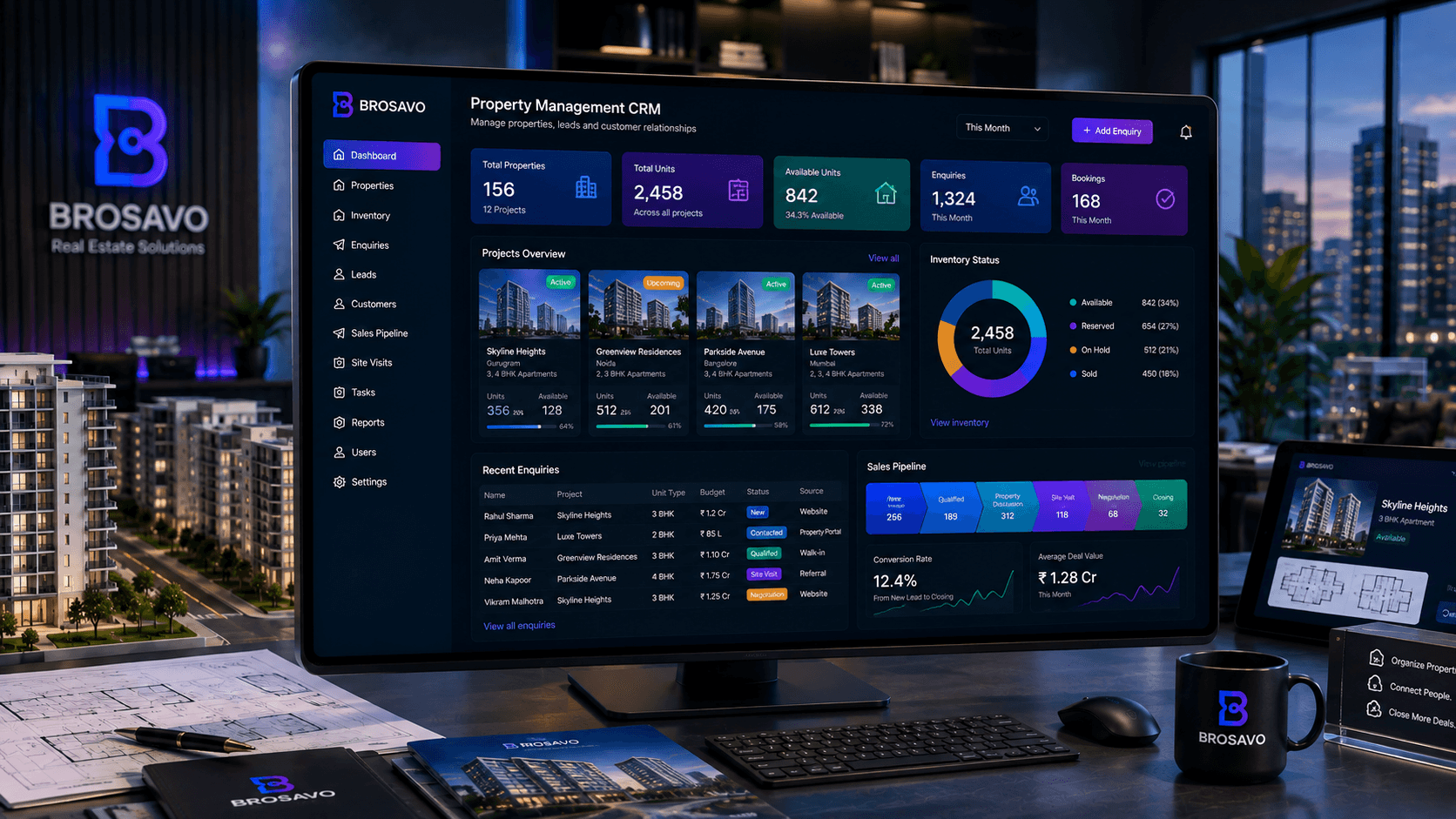
Property Management CRM for Real Estate Teams
Brosavo provides a property management CRM designed to help real estate businesses organize property information, inventory, enquiries, customers and sales workflows in one system.
Unlike rental-focused property management platforms, Brosavo's property CRM is positioned around property sales, inventory organization, lead management and customer workflows.
Whether you are a real estate agent, broker, developer or property sales team, the goal is simple: keep your property information and customer activity organized so your team can manage enquiries and sales more effectively.
What Is a Property Management CRM?
A property management CRM is software that helps real estate businesses organize property information together with customer, lead and sales activities.
For sales-focused real estate businesses, this can include property inventory, property details, enquiries, customer information, follow-ups, sales pipeline activity and related workflows.
Brosavo connects property-related information with the broader real estate CRM workflow, helping teams manage both the property side and the customer side of the sales process.
Property management does not always mean rental management
The term "property management" can refer to different types of real estate operations.
Some platforms focus primarily on:
- Rent collection
- Tenant management
- Lease management
- Maintenance requests
- Tenant portals
Brosavo's property CRM positioning is different.
The focus is on property sales and customer workflows, including:
- Property inventory
- Property information
- Property enquiries
- Lead management
- Customer management
- Follow-ups
- Sales pipeline activity
- Property-related sales workflows
This makes Brosavo relevant to real estate businesses that need to organize properties alongside the sales process.
Why Do Real Estate Businesses Need Property Management CRM Software?
Real estate businesses often manage large amounts of property information while simultaneously handling enquiries, customers and sales activities.
Without a centralized system, information can become spread across spreadsheets, documents, messaging applications and individual team members.
A property-focused CRM can help bring these workflows together.
For example, a real estate team may need to know:
- Which properties are currently available?
- Which customer is interested in a particular property?
- Which leads are being followed up?
- What stage is each enquiry in?
- Which properties have generated the most interest?
- Which customers require another follow-up?
- Which sales activities are currently in progress?
Brosavo is designed to connect these property and customer workflows within a real estate CRM environment.
What Can a Property CRM Help Real Estate Teams Organize?
A property CRM can organize several important areas of a real estate sales operation.
Property Information
Teams can maintain structured information about properties rather than relying exclusively on scattered documents or spreadsheets.
Depending on the organization's workflow, property information may include details such as:
- Property name
- Property type
- Location
- Configuration
- Availability
- Pricing information
- Property status
- Related sales information
The exact information managed can depend on the implementation and business requirements.
Property Inventory Management
Property inventory is one of the most important components of a sales-focused real estate CRM.
A structured inventory workflow can help teams understand which properties or units are available and connect that information with customer enquiries.
For developers and property sales teams, this becomes especially useful when managing multiple projects or a large number of units.
Brosavo can be positioned as a property inventory CRM alongside its broader real estate CRM capabilities.
For more information about the broader platform, see the Real Estate CRM page.
How Does Property Inventory Connect With Customer Enquiries?
A property CRM becomes more useful when property information and customer information can be considered together.
For example:
Customer enquiry → Requirement → Property matching → Follow-up → Site visit → Sales process
This allows the sales team to think about the customer's requirement in relation to the properties they may be interested in.
The exact workflow can vary depending on how a real estate business operates.
Property Enquiry Management
Property enquiries are often the starting point of a real estate sales process.
An enquiry may come from a prospective buyer who is interested in:
- A specific property
- A project
- A location
- A property type
- A particular configuration
- A specific price range
A property CRM can help the sales team maintain the relationship between the enquiry, the customer and the relevant property information.
This reduces the need to repeatedly search through disconnected records when following up with a prospect.
Customer Management
Property information is only one side of a real estate transaction.
The other side is the customer.
A real estate CRM can help teams organize customer information alongside their property requirements and sales activity.
For example, a team may need to understand:
- Who the customer is
- What property they are interested in
- What requirement they have shared
- What follow-up is pending
- Which sales stage they are in
- What activity has already taken place
Brosavo's real estate CRM brings customer management into the broader property sales workflow.
Property Lead Matching
A property enquiry is more useful when the sales team can connect it with relevant property information.
A typical sales workflow can look like:
Lead → Qualification → Requirement understanding → Property matching → Follow-up → Site visit → Negotiation → Closing
Not every business will use every stage, but the underlying idea remains the same: connect customer requirements with the appropriate property and sales activity.
This is where a property CRM can complement a broader Real Estate Lead Management system.
Follow-Up Management
Real estate sales often require repeated communication.
A customer may not make a decision after the first enquiry. They may need:
- Additional property information
- Another conversation
- A different property option
- A site visit
- Pricing discussions
- Additional follow-up
A CRM gives the team a structured place to manage these customer relationships and sales activities.
Instead of relying entirely on memory, spreadsheets or individual notes, teams can maintain customer activity within the CRM workflow.
Site Visit Workflows
Site visits are an important part of many property sales processes.
When applicable to a business's workflow, a CRM can connect a customer enquiry with the relevant property and sales activity surrounding a site visit.
For example:
Property enquiry → Customer follow-up → Property discussion → Site visit → Negotiation
The exact implementation depends on the features and workflow configured for the business.
Sales Workflows
Property information becomes significantly more valuable when it is connected to the sales pipeline.
A sales team may move a prospect through stages such as:
- New enquiry
- Qualification
- Requirement understanding
- Property discussion
- Follow-up
- Site visit
- Negotiation
- Booking or closing
The exact stages can differ between organizations.
Brosavo's broader Real Estate Sales CRM positioning focuses specifically on organizing the sales process around real estate enquiries and opportunities.
Team Workflows
Real estate teams often involve multiple people working with properties and customers.
A centralized CRM can help teams maintain greater visibility into customer and property-related activity.
For example, team members may need to understand:
- Which enquiries are being handled
- Which customers require follow-up
- Which properties are being discussed
- Which opportunities are progressing
- Which sales activities have already occurred
This creates a more structured environment than relying entirely on individual spreadsheets or disconnected records.
Reporting and Visibility
A CRM can also provide a centralized view of sales and property-related activity.
Depending on the implementation, businesses may use CRM dashboards and reports to understand areas such as:
- Lead activity
- Sales pipeline
- Customer activity
- Property enquiries
- Inventory status
- Sales progress
- Team activity
The objective is to help decision-makers work from organized information rather than disconnected sources.
How Is a Property CRM Different From Rental Property Management Software?
A property CRM designed for sales is different from software designed primarily for rental and tenant operations.
Rental-focused property management platforms may include functions such as:
- Rent collection
- Lease administration
- Tenant portals
- Maintenance management
Those are not the primary focus of Brosavo's property CRM positioning.
Brosavo focuses on connecting:
Properties + Leads + Customers + Follow-ups + Sales Workflows
This distinction is important for businesses looking for a CRM to support property sales rather than rental administration.
Who Should Use a Property Management CRM?
A property-focused CRM can be useful for several types of real estate businesses.
Real Estate Agents
Individual agents can organize property information alongside customer enquiries and follow-ups.
Learn more about Real Estate CRM for Agents.
Real Estate Brokers
Brokerages can use a centralized CRM environment to coordinate properties, customers, leads and sales activity across their teams.
Real Estate Developers
Developers and project sales teams may need to manage multiple projects, properties, inventory and customer enquiries.
Property Sales Teams
Teams focused on selling residential or commercial properties can use a property CRM to connect inventory with sales activity.
What Are the Benefits of a Property CRM?
A property-focused CRM can help real estate businesses:
Organize Property Information
Keep property-related information in a structured system.
Connect Properties With Leads
Relate customer enquiries to relevant properties and sales opportunities.
Improve Follow-Up Visibility
Maintain clearer visibility into customer activity and pending sales work.
Centralize Customer Information
Keep customer and property-related information connected within the CRM.
Improve Sales Pipeline Visibility
Understand where prospects are within the property sales process.
Support Team Coordination
Give teams a shared environment for managing customer and property activity.
Reduce Spreadsheet Dependency
Move important property and customer workflows into a centralized CRM environment.
How Does Brosavo Fit Into Property Management?
Brosavo is a technology company building software for real estate businesses.
The Brosavo real estate CRM connects several areas of the real estate workflow:
Brosavo → Real Estate CRM
Brosavo → Property CRM
Brosavo → Property Inventory
Brosavo → Real Estate Lead Management
Brosavo → Real Estate Sales
The property management CRM positioning focuses specifically on organizing property information and connecting it with customer and sales workflows.
For the complete platform overview, visit Brosavo Real Estate CRM.
Property CRM vs Generic CRM
A generic CRM can manage contacts, sales opportunities and communication.
However, real estate businesses also work with property-specific information.
A property-focused CRM can bring together:
| Generic CRM | Property-focused CRM |
|---|---|
| Contacts | Customers + property requirements |
| Leads | Property enquiries |
| Opportunities | Property sales opportunities |
| Sales pipeline | Property sales pipeline |
| Accounts | Property/project information |
| Activities | Property-related follow-ups |
| General records | Property inventory |
The advantage is not simply having another CRM.
It is having a system that reflects the way a real estate business actually works.
What Is the Best Property Management CRM?
The best property management CRM depends on the type of property business and the workflows the team needs to manage.
A business focused on rental operations may require tenant, lease, maintenance and rent-management functionality.
A property sales business may instead prioritize:
- Property inventory
- Customer management
- Lead management
- Property enquiries
- Follow-ups
- Sales pipeline
- Sales reporting
Businesses should evaluate CRM software based on their actual operational requirements rather than choosing a platform solely because it uses the term "property management."
Frequently Asked Questions
What is a property management CRM?
A property management CRM is software that helps real estate businesses organize property information together with leads, customers, enquiries, follow-ups and sales activities.
For Brosavo, the focus is primarily on property sales, inventory and customer workflows rather than rental or tenant management.
What does a property CRM do?
A property CRM can organize property information, inventory, customer enquiries, leads, follow-ups and sales activity in a centralized system.
The exact functionality depends on the CRM and its implementation.
Can a property CRM manage property inventory?
Yes. Property inventory is a common use case for a property-focused CRM. It can help teams organize property or unit information and connect that information with customer enquiries and sales workflows.
Can a CRM connect property enquiries with customers?
Yes. A real estate CRM can connect customer records with property-related enquiries, helping sales teams understand which customers are interested in which properties.
Is a property CRM the same as rental property management software?
No. They can serve different purposes.
Rental property management software typically focuses on tenants, leases, rent and maintenance.
A sales-focused property CRM focuses on properties, leads, customers and sales workflows.
Can a property CRM help real estate agents?
Yes. Agents can use a property CRM to organize property information alongside customer enquiries, requirements and follow-ups.
Brosavo also provides a dedicated Real Estate CRM for Agents page for this use case.
Can a property CRM help real estate brokers?
Yes. Brokers can use a centralized CRM to organize property information, customer relationships, leads and sales activity across their brokerage.
Can developers use a property CRM?
Yes. Developers and project sales teams can benefit from a system that connects project or property inventory with enquiries, customers and sales workflows.
How does a property CRM help with sales?
A property CRM can connect property information with the sales pipeline, allowing teams to manage enquiries, customer requirements, follow-ups, property discussions and other sales activities from a centralized system.
Does Brosavo provide rent collection and tenant management?
Brosavo's property CRM positioning described on this page is focused on property sales, inventory and customer workflows.
Do not assume rental functions such as rent collection, tenant portals, lease management or maintenance management unless those capabilities are specifically implemented and available in the Brosavo product.
Is Brosavo a property CRM?
Yes. Brosavo is a technology company building software for real estate businesses, and its real estate CRM can be positioned for property information, inventory, customer and sales workflows.
Get Started With Brosavo
Your property data should support your sales process rather than exist separately from it.
Brosavo brings together the core CRM workflow around:
Properties → Leads → Customers → Follow-ups → Sales
Whether you are an agent, broker, developer or property sales team, a structured CRM can make it easier to organize property-related information and manage customer relationships.
Explore the Brosavo Real Estate CRM or learn more about Real Estate Sales CRM.
Ready to organize your real estate property workflow?
Transform Your Real Estate Business with Brosavo
Brosavo Real Estate CRM helps real estate professionals capture leads, automate follow-ups, manage properties, organize customer relationships, and streamline their daily operations from one modern platform.

Written by
Brosavo Editorial Team
Research & Content Team
The Brosavo Editorial Team publishes in-depth guides, industry research, software comparisons, and best practices for real estate professionals. Every article is reviewed for accuracy and updated regularly to reflect the latest trends in the real estate industry.
Related posts
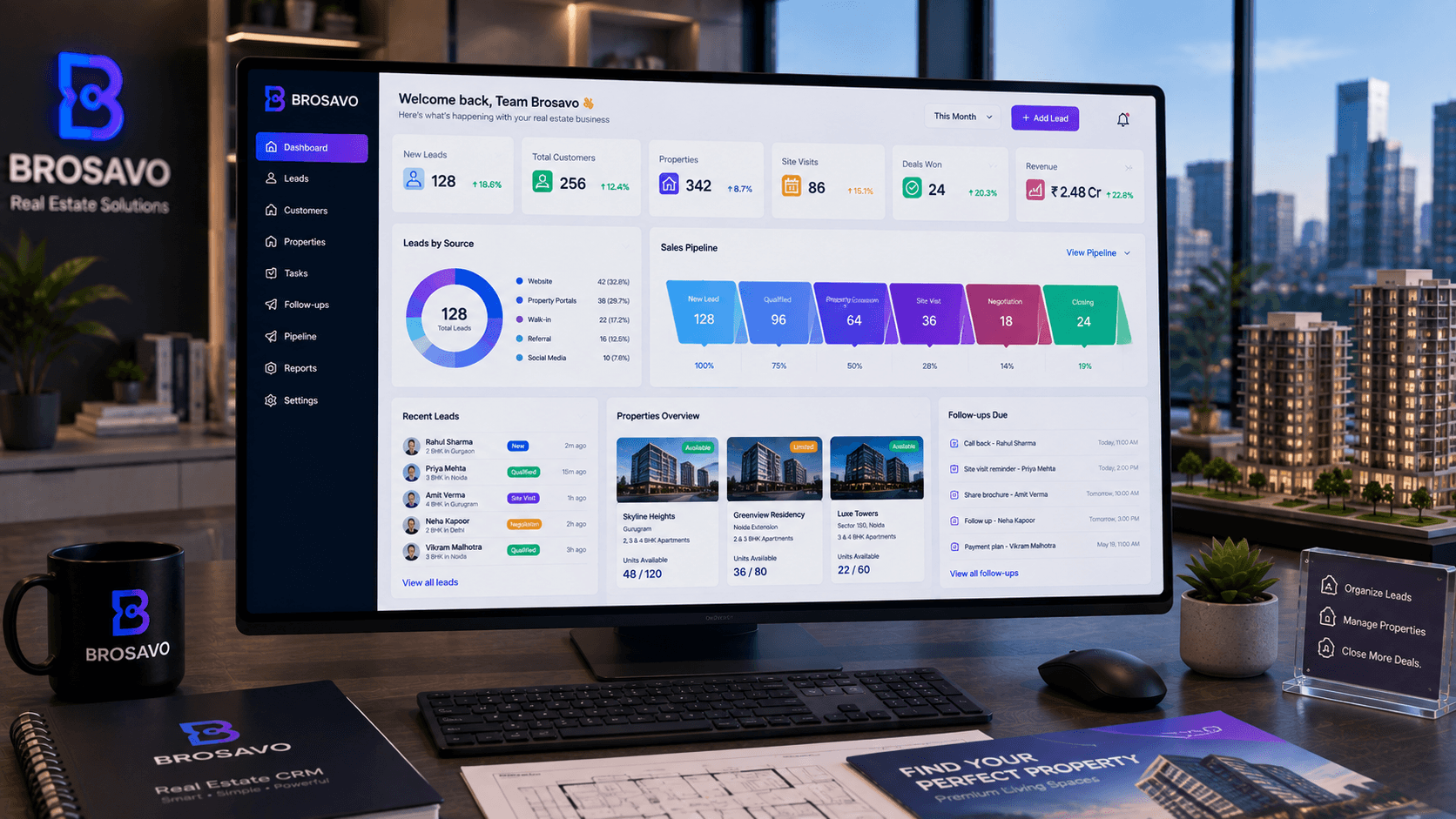
Free Real Estate CRM: What to Look For Before Choosing One | Brosavo
Looking for a free real estate CRM? Compare lead limits, users, property inventory, follow-ups and reporting, then evaluate Brosavo for your team.
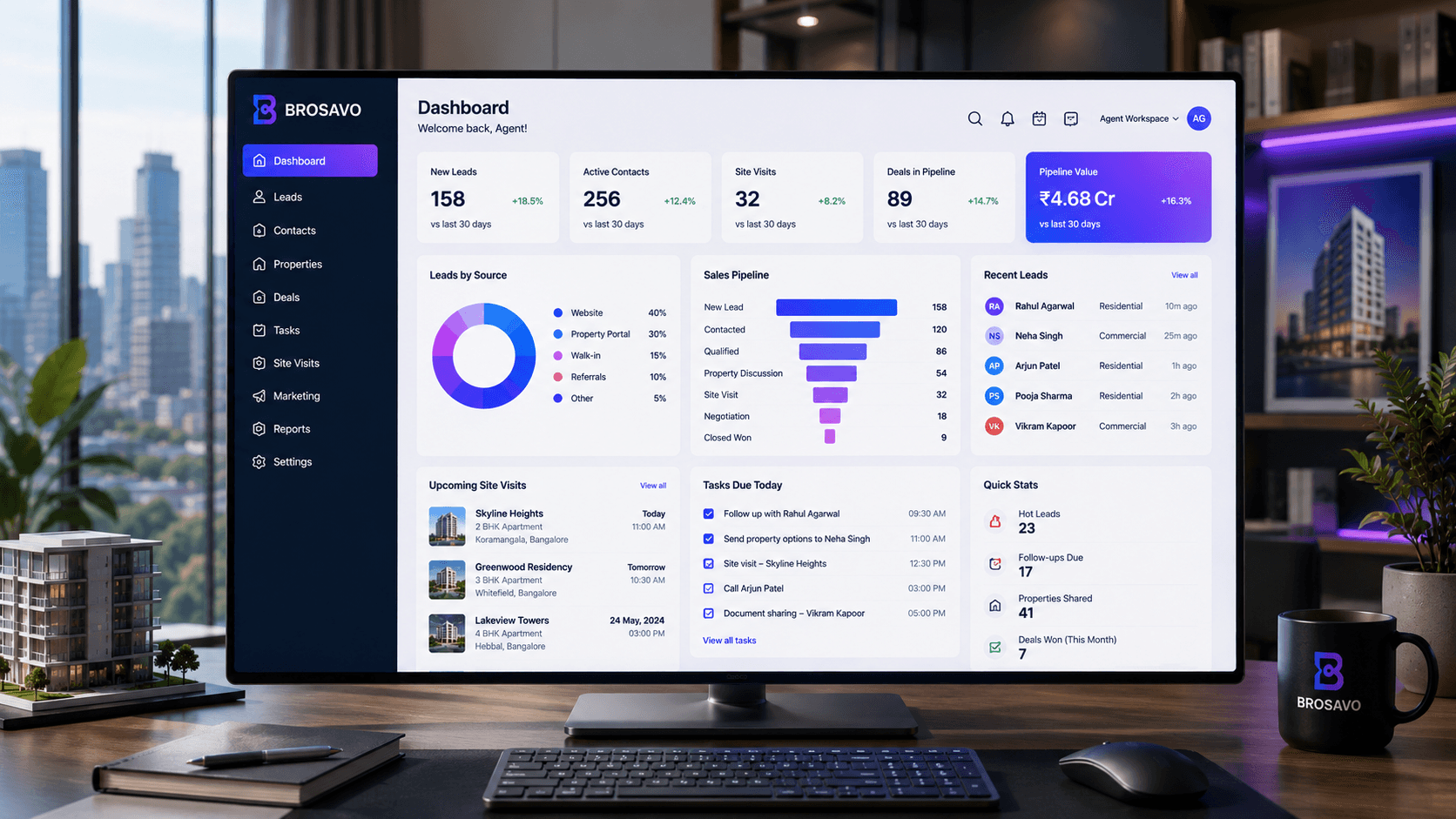
Real Estate CRM for Agents | Brosavo
Brosavo is a real estate CRM for agents that helps organize leads, customers, follow-ups, property enquiries and sales workflows in one place.
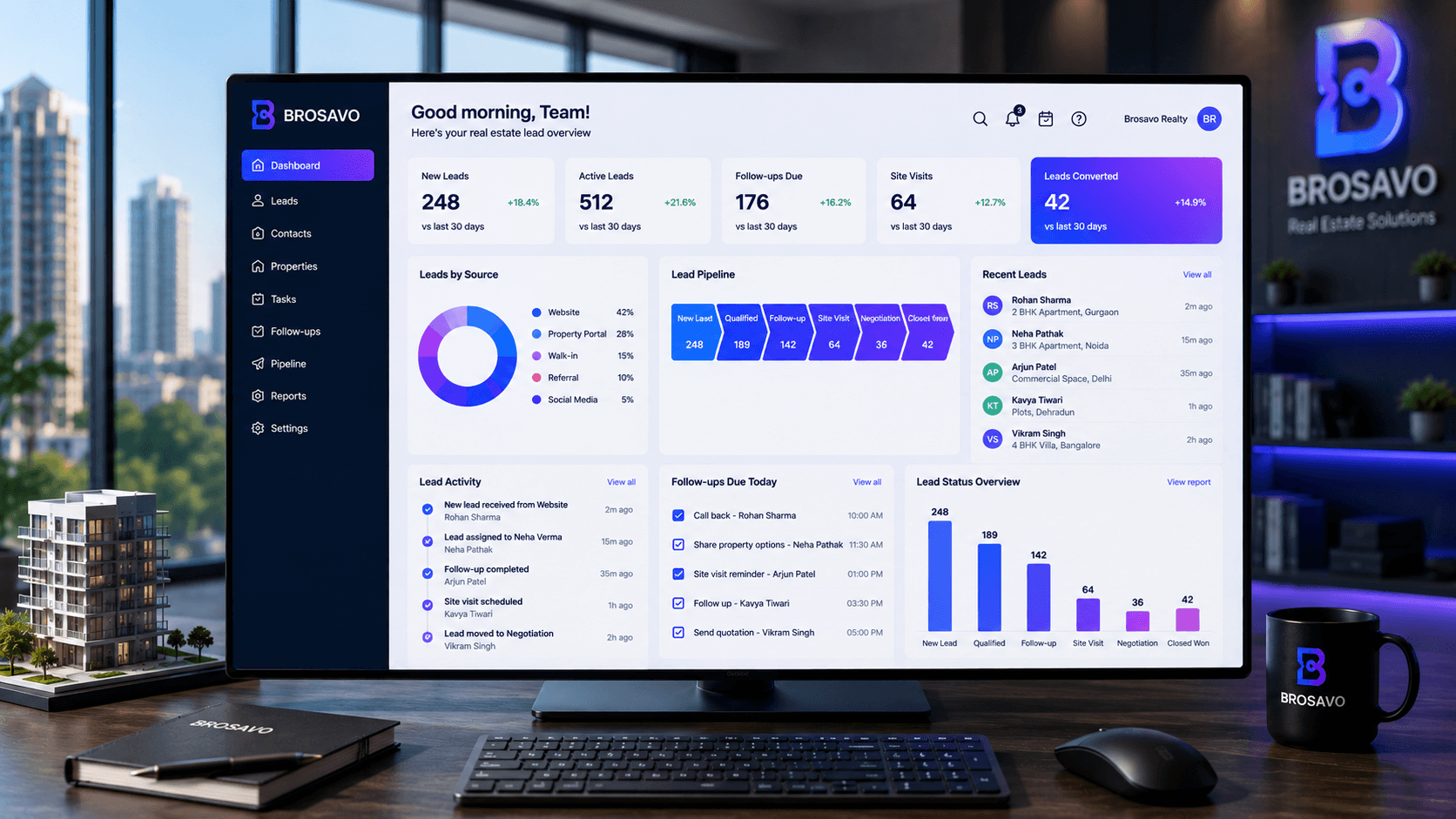
Real Estate Lead Management Software | Track & Convert Property Leads
Manage real estate leads from enquiry to closing with Brosavo. Track leads, follow-ups, assignments, pipelines and customer interactions.